Harry Ratliff has been connected to Barnes-Jewish Hospital since birth and wrapped in its care as a heart patient. Today, he’s connecting his role as a Foundation board member to his passion for serving the community he loves.
When an EF-3 tornado ripped through St. Louis on May 16, 2025, it also tore away a piece of Harry Ratliff’s heart. The deadly twister destroyed the 125-year-old church where Harry grew up and took the life of a friend and fellow church member.
The magnificent brick Centennial Christian Church is a bedrock of the community and a vital community health partner of Barnes-Jewish Hospital and WashU Medicine. The Foundation for Barnes-Jewish Hospital supports The Breakfast Club Inc., which was launched by church members in partnership with Siteman Cancer Center, to increase mammography rates for uninsured and underinsured women in north St. Louis City and north St. Louis County.
While the devastating tornado deeply impacted Harry and thousands of other St. Louisans, Harry is no stranger to personal challenges and tragedy. Yet, he continues to meet adversity with grace and an ever-stronger commitment to helping others.
A Hometown Hero
A proud St. Louisan, Harry calls himself “an unabashed homer.” He grew up in the Fountain Park neighborhood just a mile from Barnes-Jewish Hospital, attended Saint Louis Public Schools, graduated from University of Missouri-St. Louis, and later pursued graduate work at Webster University.
“Over the years, I had plenty of opportunities to relocate for my career, but family always kept me here,” Harry says. “I’ve never regretted that decision for one second.”
Harry’s dedication, strong work ethic, and compassion for others led him on a successful career path. Today, he is vice president and wealth management advisor in partnership with his son, Geoff Ratliff, through the Ratliff Wealth Management Group at Merrill Lynch in St. Louis.
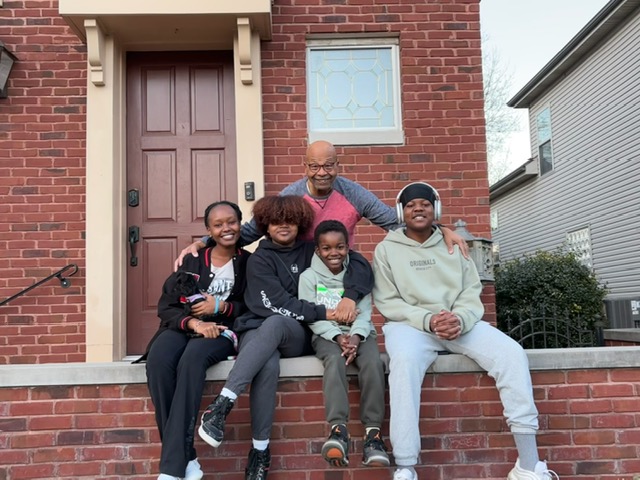
A father of two and grandfather of three, Harry lives in the Central West End neighborhood of St. Louis with his wife, Gloria.
 Giving a Voice to Others
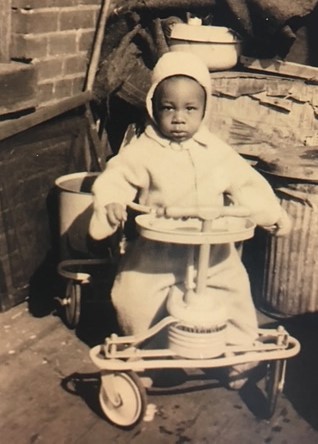
Harry’s family connection to Barnes-Jewish Hospital runs deep. “I was born in the lower level of the Maternity Building at the former Barnes Hospital when there was still segregation, and now I’m on the board of The Foundation for Barnes-Jewish Hospital,” he says. “It’s kind of an ironic twist of turns.”
Harry’s son, Geoff, also was born at the former Barnes Hospital and was even featured on local TV as the first boy born in 1977. Harry’s first wife, Deborah, was spotlighted with Geoff as the new mom, who also happened to be a nurse in the hospital’s newborn nursery.
Later, Deborah became a nurse practitioner and worked for an oncology group at Siteman Cancer Center. In 2000, she was diagnosed with idiopathic pulmonary fibrosis that led to a double lung transplant in 2003 at Barnes-Jewish Hospital. She passed away from complications five years later.
“Throughout her care, all the team members gave us a sense of comfort,” Harry says. “We knew we were in good hands.”
His family’s experience through Deborah’s transplant inspired him to help others.
He gives an example of a woman they met from Atlanta who moved to St. Louis with her husband so she could have a transplant at Barnes-Jewish. Another couple was living in a camper near the hospital because they didn’t have money for a hotel or apartment.
“We realized people have to go through so much, and many aren’t as fortunate as we are,” he says.
After Deborah passed away, Harry joined the board of Mid-America Transplant, an organ and tissue procurement organization based in St. Louis. He also served on the boards of Christian Hospital, which is a BJC HealthCare hospital, and People’s Health Centers. It was all part of his quest to give a voice to others and improve access to health care.
“Most of my volunteer work has something to do with health care,” Harry says. “I believe access to good quality health care is a right given to every American.”
Heart Health Hits Home
Over the past few years, Harry has been on his own heart health journey. In November 2022, he had an aortic valve replacement at Barnes-Jewish Hospital.
The surgery was performed by Tsuyoshi Kaneko, MD, WashU Medicine division director of cardiothoracic surgery at Barnes-Jewish. Dr. Kaneko is a world-renowned leader in complex valvular heart disease. (Learn more about Dr. Tsuyoshi Kaneko.)
“I had been able to delay the surgery for about five years through diet and exercise,” Harry says. “But in 2022, I started having more symptoms. I found out my heart was enlarged and the aortic valve was leaking, so my cardiologist, Dr. Alan Braverman, said it was time to do something about it before I developed congestive heart failure.”
Alan Braverman, MD, FACC, a WashU Medicine cardiologist at Barnes-Jewish, and Dr. Kaneko explained that Harry needed open-heart surgery to replace his aortic valve because he wasn’t a good candidate for the transcatheter aortic valve replacement (TAVR) procedure.
TAVR is a minimally invasive procedure developed to replace a damaged aortic valve. It’s ideal for patients who may not tolerate open-heart surgery. However, even though TAVR is now performed more frequently than traditional surgical aortic valve replacement, not all patients are candidates for TAVR.
“What impressed me about Dr. Kaneko is his attention to detail,” Harry says. “He is both competent and compassionate. He and Dr. Braverman explained every option and every part of the procedure and why I couldn’t have the TAVR procedure. They put me at ease. Dr. Kaneko is responsible for me being alive today.”
Because Harry worked out five days a week and was otherwise healthy, the doctors told Harry he was in “as good a position as possible” for recovery after surgery.
After a week-long stay in the hospital, Harry went home. He says he’s thankful he decided to participate in the hospital’s outpatient cardiac rehabilitation program in the following weeks. “I thought I would be fine without it, but Dr. Braverman gently, but firmly, suggested that cardiac rehab would greatly help my recovery. The smartest thing I did was listen and do cardiac rehab.”
Dream Patient Becomes Patient Advocate
Three years later, Harry is healthy and active. He’s a doctor’s dream patient.
“I’m a very compliant patient: I take the medications I’m supposed to, I keep my weight down, I go to the gym, and I do all they ask me to do,” he says. “I don’t want to come back to the hospital except to see a friend. I feel so grateful to be in this position.”
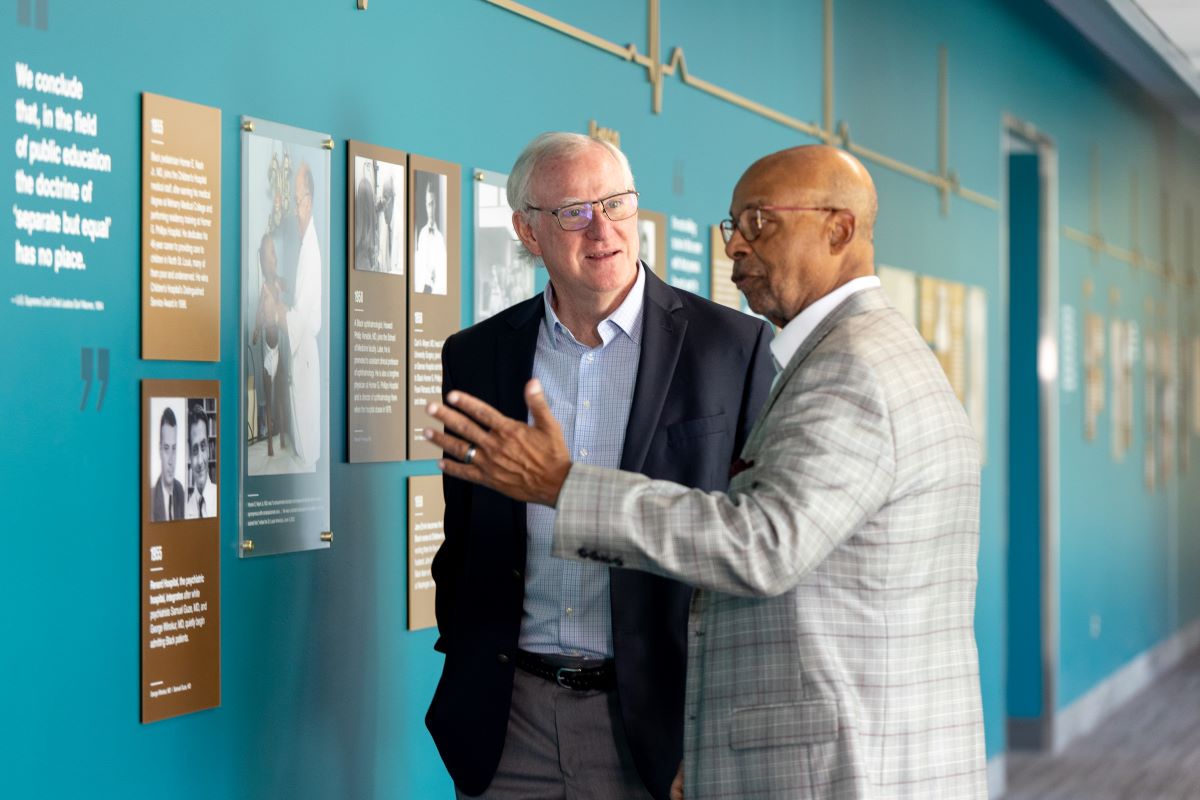 After his hospital stay, Harry wrote a personal note to John Lynch, MD, president of Barnes-Jewish Hospital and the Foundation, to express his gratitude for his excellent care. A year later, Harry joined the board of The Foundation for Barnes-Jewish Hospital.
“I joined the board because I felt it was my responsibility to be an advocate,” Harry says. “I have perspective of 25 years being involved in health care at all levels. I’ve sat on both sides of the table as a board member and volunteer and also as a recipient of the quality health care that my family has gotten at Barnes-Jewish Hospital going back to my father 50 years ago, my wife nearly 25 years ago, and then my own personal experience just three years ago.”
As a member of the board’s nominating committee, Harry is excited to bring people with different voices, points of view, and life experiences to the board to benefit the community.
The building where Harry was born now serves as the entrance to the new Plaza West Tower at Barnes-Jewish Hospital that welcomes heart and vascular patients. The beautiful, patient-centered tower opened this fall.
“The new tower enhances the hospital’s ability to serve the community and will add resources,” Harry says. “It’s part of the hospital’s continuing quest for excellence, which is a great mission. People literally come from all over the country to get health care here. We are very fortunate to have the health care ecosystem that we have right here in St. Louis.”
A Commitment to Community
With every role Harry fills personally or professionally, he brings his passionate commitment for St. Louis and for health care. The tornado’s devastation on his own community only reinforced this commitment.
He credits his parents for setting the example. “When my mom wasn’t working, she volunteered as a ‘Gray Lady’ for the American Red Cross and at Homer G. Phillips Memorial Hospital. So giving back to the community is part of my DNA.”
Harry also understands the feelings of financial insecurity and health care uncertainty all too well since his father passed away at age 54. Harry’s dad, who was self-employed, struggled with his health from the time Harry was 13. In the 1960s, his dad participated in a groundbreaking study on uncontrolled hypertension at WashU Medicine. However, in 1970, he passed away from a stroke when Harry was 22.
The consequences were far-reaching. Harry had to temporarily drop out of college to work so he could take care of his mom and the family finances. College tuition wasn’t in the budget.
“I know what it’s like not to be able to keep your life intact because of lack of insurance or lack of access to good health care,” Harry says. “And I’ve just never forgotten it.”
Harry’s own experiences and continued involvement in the community make him keenly aware of the ongoing needs. He hopes his role on the Foundation board can shine a light on some of those needs.
“I’ve been very fortunate in my career after growing up in the Fountain Park neighborhood where the Centennial Christian Church was right across the street from the only statue of Dr. Martin Luther King Jr. in the state of Missouri,” Harry says. “Those are my roots. Many people in the underserved community don’t have access to resources and don’t have a voice.”
He is encouraged to see the Foundation supporting more community health initiatives. “I love the fact that we’re increasing community programming because the need is increasing.”
Harry says Foundation donors play a vital role in health care needs across the spectrum.
“Everyone’s lives revolve around good quality health care. Money can’t buy your health, but it can support better care and research for new cures.”
Written by Joyce Romine
Photography by Gara Elizabeth Lacy and Tim Parker, with additional photographs provided by Harry Ratliff