Thirty-four years after surviving Stage 4 ovarian cancer, Elizabeth Mannen Berges is on a mission to help Siteman Cancer Center researchers find better treatments with fewer side effects for women with gynecological cancers.
Facing any cancer once in a lifetime is enough of a challenge—battling cancer five times would bring most people to surrender. But not the tenacious Elizabeth Mannen Berges.
After being diagnosed the first time in 1991 with Stage 4 ovarian cancer at age 26, Elizabeth leaned into her feisty nature and never-quit attitude to defy the odds. Her subsequent cancer diagnoses have only strengthened her resiliency and resolve to give back today in her adopted hometown of St. Louis.
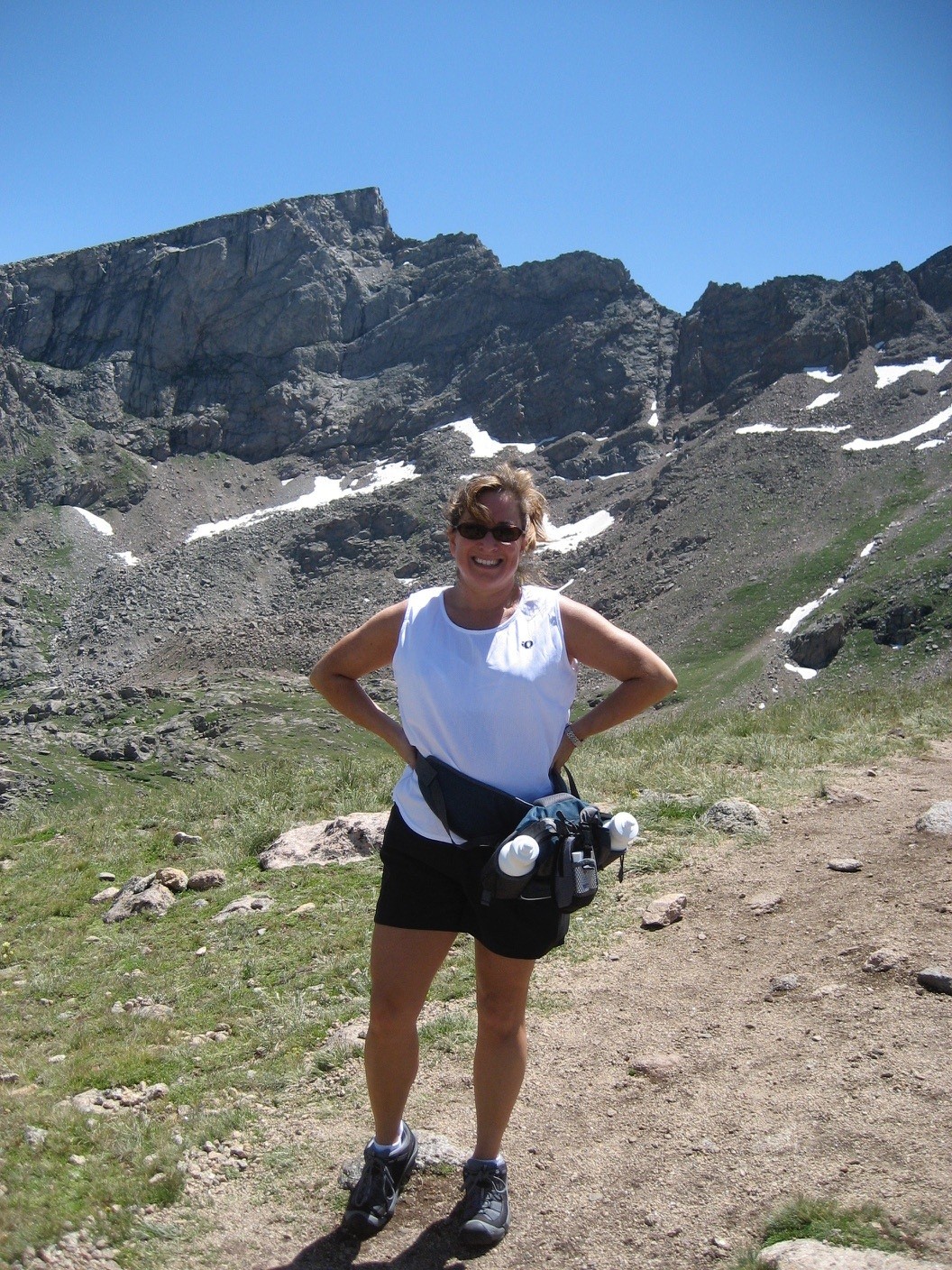 When You’re Low, You Go
Elizabeth was following her career dreams in Jackson Hole, Wyoming, when ovarian cancer threw her a shocking curve ball. “My cancer journey started like most do with a lot of disbelief, terror, and that surreal feeling,” she says. “I was told to get my affairs in order. What does that even mean when you’re 26?”
She refused to accept that she had no options. Her tenacity led her to a surgeon in nearby Salt Lake City who gave her hope. After extensive surgery, she endured two grueling years of chemotherapy all during the time when her friends were getting married and pursuing careers. Her family lived across the country in Pennsylvania, so her support system was scarce.
“It was the loneliest time of my life,” she says. “I was living on ‘Planet Cancer,’ and the rest of the world was not. I was consumed by hair loss and was vomiting so often that my under eyes turned black and blue.”
Rather than wallow in self-pity, Elizabeth found a part-time job that led to her becoming a financial advisor with A.G. Edwards, which was later purchased by Wells Fargo. It was the launch of her successful, groundbreaking career in wealth management.
“I couldn’t do nothing,” Elizabeth says. “My personality is ‘when you’re low, you go.’” Yet she had more hurdles to come.
Finding the Beacon
After fighting her way through treatment and side effects, Elizabeth finally had a reprieve from “Planet Cancer.” But two years later, ovarian cancer reared its relentless head again. “The single hardest day on my cancer journey was the second time I heard ‘you have cancer,’” Elizabeth says. “I knew in my head to treat ovarian cancer as a chronic cancer, but somehow in my heart I thought I had kicked it to the curb.”
But she fought through again— and again eight years later.
Elizabeth’s career eventually brought her to St. Louis more than 30 years ago, and her Salt Lake City doctor pointed her to Alvin J. Siteman Cancer Center at Barnes-Jewish Hospital and Washington University School of Medicine.
He also introduced her to David Mutch, MD, to continue her care. Dr. Mutch was a highly regarded WashU Medicine gynecologic oncologist and surgeon and a pioneer in gynecologic oncology research. Today, he continues that legacy as a professor of OB/GYN at WashU Medicine.
“My doctor in Salt Lake City knew Dr. Mutch, which was reassuring,” Elizabeth says. “Dr. Mutch is just brilliant and world-renowned, as well as kind. I have such respect for him and for Siteman. We are blessed to have Siteman and this group of research doctors and clinicians in this city. It makes a difference, and it’s a beacon for St Louis.”
An Urgent Need
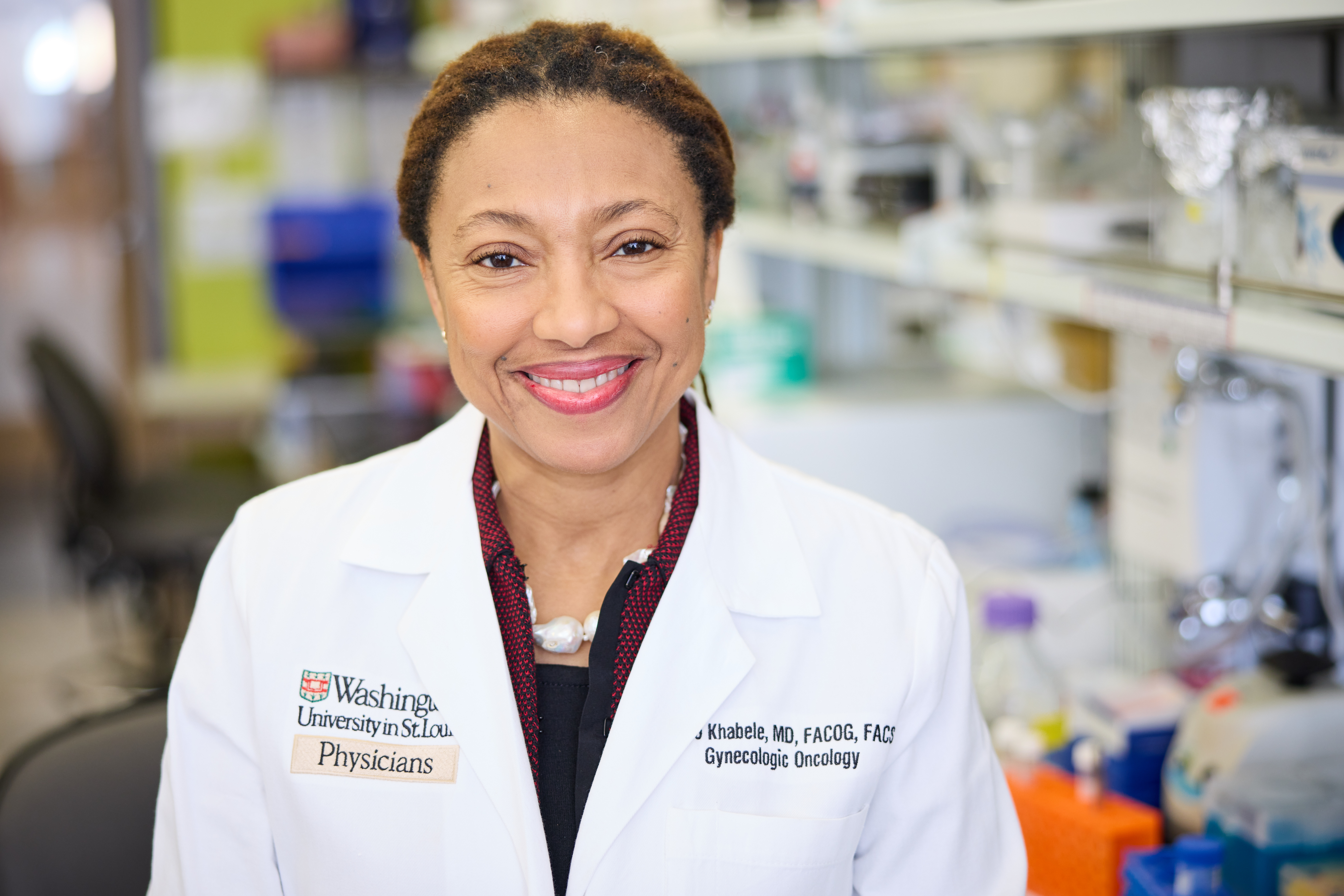
Elizabeth has leaned on Dr. Mutch, as well as his colleague Dineo Khabele, MD, chair of the WashU Medicine department of obstetrics and gynecology, on her continued journey with cancer and is a cheerleader for the team’s leading-edge research.
Gynecological cancers are those “cancers below the belt,” which include ovarian, endometrial, and cervical cancers, Dr. Khabele explains.
She says more research is urgently needed in gynecological cancer. “All those types of cancers are not well studied and not well funded by research entities, and we don’t have enough effective treatments. So that led me to the research lab to try to find new ways to diagnose and treat these cancers. These cancers cause the deaths of so many women in the United States, and uterine, or endometrial cancer, is on the rise. An increasing number of women, Black women in particular, are dying from this type of cancer. So, we need to find better ways to diagnose it early or prevent it, and we need to find better ways to treat it.”
Ovarian Cancer Progress
Dr. Khabele’s research focus is to find new ways to overcome chemotherapy resistance in ovarian cancer. “There are subtypes of ovarian cancer that don’t respond well to standard treatments, so we’re looking at new targeted therapies to overcome that and to help people live longer.”
Dr. Khabele is proud of the progress she and her team have made. For example, they tested a new combination of drugs that had never been studied for ovarian cancer before and, based on its success, have advanced the study all the way to a clinical trial.
“It’s really fulfilling when we have a new discovery,” she says. “I’m also proud of being able to train the next generation of researchers. In everything we do, we’re passing the baton and training the next generation.”
Endometrial Cancer Progress
Dr. Mutch continues his research focused on endometrial cancer. He is leading the prestigious Route 66 Endometrial Cancer Specialized Program of Research Excellence (SPORE) at Siteman after receiving a grant from the National Cancer Institute. The research collaboration is working to change the trajectory for patients with or who are at risk for endometrial cancer through development of new treatment and prevention strategies.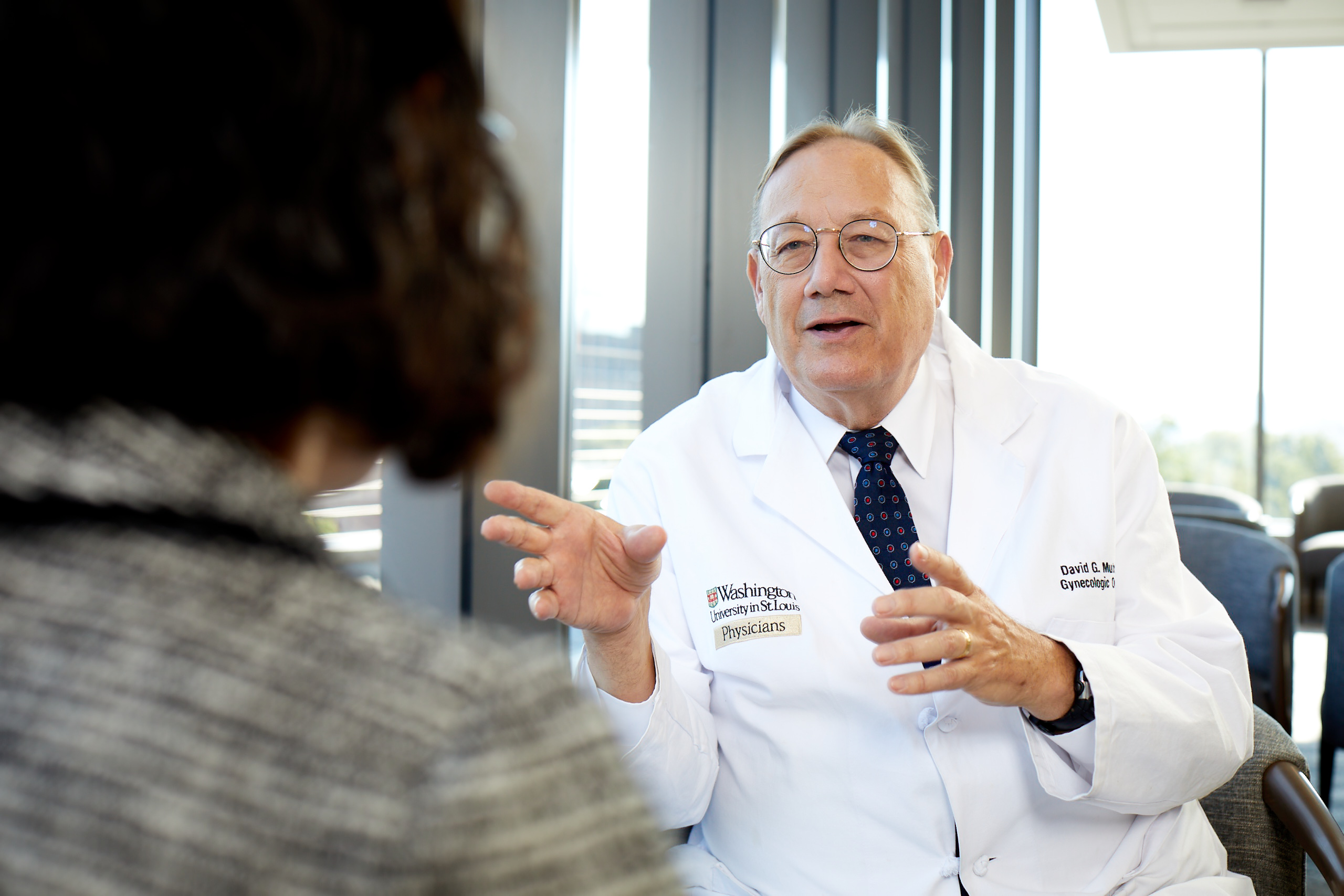
“Sadly, endometrial cancer is one of the only cancers that is increasing in incidence and in mortality, and we need to understand that better,” he says. “It’s also woefully underfunded compared to other cancers. If we’re going to make a dent and stop this trend toward worsening survival, we need to understand the disease better.”
The SPORE builds on Dr. Mutch’s successful track record of research that resulted from early-stage support from donors through The Foundation for Barnes-Jewish Hospital.
It all started nearly 30 years ago when Dr. Mutch was looking for better treatments for endometrial cancer.
“Early-stage funding from donors allows newer investigators to get their footings so they can apply for and get independent funding,” he says. “The Foundation has been instrumental in supporting our research. In addition, a requirement of receiving the SPORE grant is that we needed to have institutional support. The Foundation and WashU Medicine gave us the core institutional support required to obtain the SPORE.”
Dr. Khabele is excited about the broad impact of the SPORE.
“This group of investigators is dedicated to studying endometrial cancer, with multiple projects looking at better prevention and treatments,” Dr. Khabele says. “We’re the only endometrial cancer SPORE in the country right now. And we’re in the middle of the country where the need is so great.”
The Route 66 SPORE also includes a component to drive innovation in the field by mentoring scientists interested in endometrial cancer research, which builds momentum for future research and progress, Dr. Mutch says.
Stacking the Research Bench
When Elizabeth was treated for ovarian cancer in the 1990s, the standard protocol was heavy doses of chemotherapy, but those large amounts of chemotherapy as a young adult have taken a powerful, lasting toll on Elizabeth’s body over time. Elizabeth had two reoccurrences of ovarian cancer along with two diagnoses of breast cancer in the past 30 years. She has also had two heart attacks, two pulmonary embolisms, autoimmune issues, and a massive stroke that forced her to relearn how to walk and talk.
Cancer treatments have improved dramatically, but lasting side effects remain an issue for many patients.
Elizabeth’s husband, Jim Berges, had seen cancer treatment’s devastating impact once before. His first wife, Cathy, was also treated for cancer in her 20s, which led to lifelong, life-altering side effects. Witnessing this firsthand is another inspiration for Jim and Elizabeth to support cancer research through the Cancer Frontier Fund at The Foundation for Barnes-Jewish Hospital.
“Let’s get to targeted treatments that just affect the cancer and not everything else in the body,” Jim says. “I’m inspired to see that work going on at Siteman. We now have these targeted therapies that are focused on the bad cells and leave the good cells alone. It’s exciting stuff to see.”
This progress—and her sense of urgency— fuels Elizabeth’s drive to give back. “Targeted therapies and research that can give a person with a specific cancer individualized treatment is the way of the future,” she says. “None of that happens without research. Top doctors like Dr. Mutch and his team are the ones that pull down National Institutes of Health (NIH) dollars and SPORE grant money to do critical research in their specialty areas. Knowing doctors like Dr. Mutch, Dr. Khabele, and others at Siteman are focusing their research on gynecological cancers means the future is bright. The bench is stacked!”
Elizabeth and Jim are deeply committed to ensuring that the bench remains stacked and that the next generation of medical pioneers are rooted at Siteman. This past year, to honor Dr. Mutch, they endowed the David and Lynn Mutch Distinguished Professor, and Premal H. Thaker, MD, MS, was installed as the inaugural professor to hold this esteemed role at WashU Medicine.
Answering the Call
Elizabeth and Jim’s appreciation for Dr. Mutch and other leading cancer research scientists and physicians is demonstrated in countless ways, including serving as Lead Ambassadors for the Foundation’s annual Illumination Gala, being held June 14, 2025. The event raises significant support for the Cancer Frontier Fund at the Foundation, which fuels cancer research at Siteman.
“Elizabeth has boundless energy,” Dr. Mutch says. “She is committed to gynecological cancer research and has demonstrated that on multiple levels within our community, with WashU Medicine, and with The Foundation for Barnes-Jewish Hospital. That support is necessary for us to not only perform our mission but to move forward in a positive way. Without support like Elizabeth and Jim’s, we would not be able to do the leading-edge research we’re doing.”
 After Elizabeth’s gauntlet of health care battles, the Bergeses understand the critical importance of research to advance care.
“Without research, nothing happens,” Elizabeth says. “The future of cancer is research. If you want the most bang for your buck, it’s donating to research through the Cancer Frontier Fund.”
Dr. Khabele says support for early-stage research is vital to ensure the best ideas can move forward into larger projects. “The Cancer Frontier Fund is critical to our work because it provides resources and funding for research, for pilot funding, and for developing the next wave of researchers and investigators. We’ve received enormous support from The Foundation for Barnes-Jewish Hospital, and we’re incredibly grateful for it.”
No Time To Waste
Elizabeth has a reputation among her family, friends, and colleagues as a person who gets things done.
“I can be a little bit persistent,” Elizabeth says. “But when someone puts a clock on you, there’s no time to waste.”
As she navigated her own health care battles with urgency and tenacity, Elizabeth recognized how beneficial it was to her experience to have an education and access to quality health care insurance and excellent medical care. This inspires her to make sure others have the resources they need too, and she spends time serving on the St. Louis Ovarian Cancer Awareness board with Dr. Mutch, as well as serving as a passionate supporter of Gateway to Hope, which helps removes barriers for women facing breast cancer. In fact, this year the Berges Family Foundation launched a $1 million challenge grant to Gateway to Hope to aid them in reaching more women in Missouri who need assistance on their breast cancer journeys.
“Cancer has given me the greatest gift: the gift of empathy,” she says. “I know everybody is fighting their own challenges, whether that’s being food insecure or overwhelmingly lonely, or they’re going through an awful divorce, or they’re unhoused, underemployed, or swamped with health care bills.”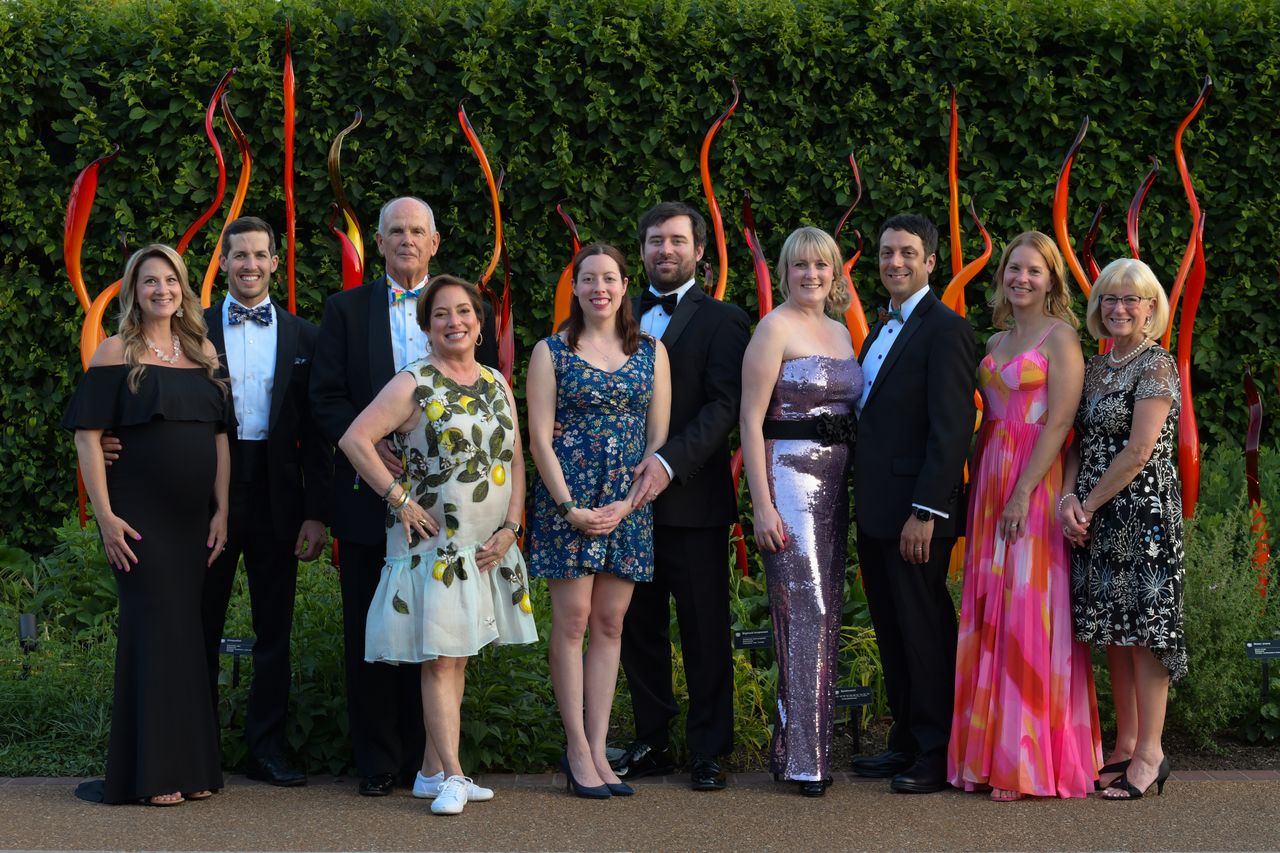
Elizabeth’s compassion for others is one of the qualities that drew Jim to her.
“What inspires me most about Elizabeth is her desire to give back, whether it be financial or some level of service,” Jim says. “As a survivor herself, there’s not a week that goes by that she’s not helping some friend or acquaintance navigate the cancer journey. She helps them understand what they’re facing and gives them optimism.”
After all Elizabeth has been through, those calls for help or news of a friend dying of ovarian cancer sometimes trigger a painful question for Elizabeth: Why am I still here?
“The only answer I can come up with is that there is still work for me to do,” she says.
The Greatest Gift
Philanthropy has been a common thread throughout Elizabeth and Jim’s relationship. The Berges Family Foundation was founded in 2014 with a goal of making St. Louis a great place to live, work, visit, and invest.
“Giving back to the community that we love has become the more meaningful thing we’re doing and, frankly, the most rewarding thing,” Jim says.
Elizabeth agrees. “It starts with gratitude. It’s a way to give back and fund organizations that are really moving the needle in some of the most critical areas. It’s our responsibility— to whom much is given, much is expected. We’ve taken care of our families, and it’s time for us to take care of some others.”