When Penny Pennington was diagnosed with breast cancer at age 39, she admits she was scared. She was a newly minted financial advisor with Edward Jones, building her practice in Livonia, Michigan, and juggling life as a working mom.
She actually had her mother to thank for her diagnosis. Penny scheduled a routine screening mammogram when her mother was diagnosed with breast cancer three months before. She didn’t expect that they would be going through treatment together, though.
The mother-daughter duo supported each other every step of the way. “I came out as a thriver,” Penny says. “You grow through what you go through. The experience shaped my life and made me more empathetic.”
Penny’s career continued to flourish after her successful treatment. More than 20 years later, she is the managing partner at Edward Jones and lives in St. Louis with her husband, Mike Fidler. She’s also part of the sisterhood of women who have had breast cancer—which she says has far too many members.
That’s why Penny and Mike are making investments in breast cancer prevention and research at Siteman Cancer Center through The Foundation for Barnes-Jewish Hospital.
“I am thriving today because of advances made by researchers and patient advocacy before my diagnosis and treatment in 2003,” Penny says. “I’m paying it forward. I know how uplifting it is to know you are not alone and that, indeed, thriving is not only possible, it’s probable—and made more so by Siteman, great doctors, and ongoing research.”
Kicking Cancer to the Curb
Penny’s mantra is “Kick Cancer to the Curb.”
“The reason I use this phrase is that it signals to me that we can be in charge of our future in cancer research, treatment, prevention, and how we thrive,” she says. “It’s an active, assertive image for me that relegates cancer to its rightful place. Siteman and donor investment take the bully out of cancer.”
A powerful way Penny and Mike are targeting the bully is by supporting the Breast Cancer Community Investment Fund at the Foundation, which they established in 2023 to support breast health education and to increase the number of screening mammograms and participation in clinical trials focused on health equity.
Today—22 years since her breast cancer diagnosis—Penny is a business and community leader, she travels, she hikes, and she spends time with her family—including a new granddaughter. And she wants to make sure others have the same chance.
“Through our giving, we want to give all our daughters, sisters, mothers, and other loved ones more life, more time, and more thriving for generations,” she says.
Navigating Better Health
Penny and Mike’s focus on community engagement aligns with the work of Katherine Weilbaecher, MD, a WashU Medicine medical oncologist at Siteman Cancer Center. Dr. Weilbaecher is making significant strides in breast cancer prevention and diagnosis with a special focus on the underserved and high-risk areas of the St. Louis region.
In 2022, Dr. Weilbaecher established the Breast Cancer Engagement Group (BCEG) to decrease breast cancer mortality through earlier screening and risk assessments and by providing patients with access to world-class personalized care and clinical trials. A big part of these efforts includes helping patients receive a diagnosis at an earlier, more treatable stage with the help of patient navigators.
The BCEG is comprised of about 50 individuals, including physicians and scientists from WashU Medicine and BJC, community partners, and public health specialists with different areas of expertise to address higher rates of breast cancer and breast cancer mortality in certain areas of St. Louis.
 With a generous lead gift from Penny and Mike through the Breast Cancer Community Investment Fund, along with gifts from other compassionate donors, the BCEG was able to pilot a same-day mammography program for patients at Christian Hospital and Northwest HealthCare, which serve north St. Louis County as part of BJC HealthCare.
With an overarching goal to improve breast cancer outcomes, the same-day mammography pilot set out to increase mammography screenings by 5%. After one year of the successful pilot, the BCEG celebrated a 25% increase overall and a 78% increase among women between the ages of 40 and 50.
In addition to increasing screenings, patient care support at the clinic is making a critical impact. Now, five days a week, all patients receiving screening mammograms at Christian Hospital and Northwest HealthCare also receive personalized cancer risk assessments—all before they leave their appointments. Further, nurse navigators can immediately guide patients to next steps in care if needed and can discuss scan results, schedule follow-up calls, answer patient questions, and connect patients to resources.
Prior to BCEG intervention, 30% of patients who had abnormal screening mammograms had significant delays or were lost to follow up for their diagnostic mammograms. That means cancer may have gone undiagnosed or the patient had a delay in starting treatment. After the pilot, the number dropped to less than 10%.
As part of the pilot study, the BCEG also found that 34% of patients getting routine screening mammograms at Northwest HealthCare are at high risk for breast cancer and qualify for referral to a high-risk specialist and consideration for genetics counseling. Before intervention, less than 3% of these patients were scheduled to see a high-risk breast cancer specialist, but thanks to the BCEG program, the number of patients who were referred to a high-risk breast cancer specialist increased to 75%.
Because of Penny, Mike, and the generosity of other donors, the pilot was a success, and all numbers are now moving in the right direction with a larger impact across the BJC system.
“This is how we can prevent advanced cancer—by performing regular mammograms and identifying pre-cancers and cancers at the earliest stages,” Dr. Weilbaecher says. “What started as a single-day clinic once a week has now expanded to a five-day a week clinic with a full-time nurse navigator and increased presence of Siteman radiologists, including Dr. Debbie Bennett, and high-risk cancer specialists for optimal, comprehensive care.” (Learn more about Dr. Bennett.)
This equates to more women screened, more referrals to high-risk specialists, more genetic counseling, shortened time for follow-up appointments, and fewer patients lost to follow-up.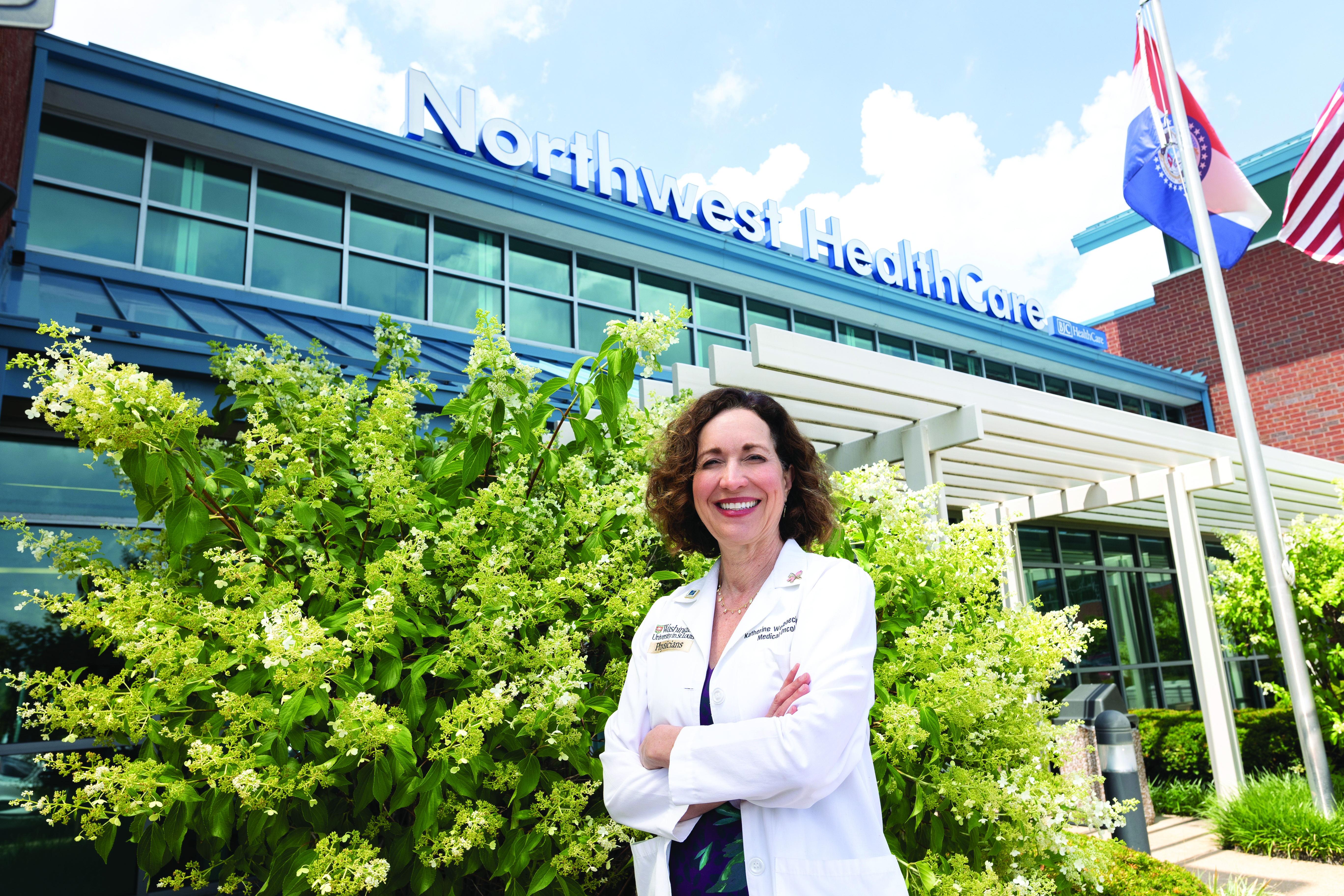
“It’s so exciting to see that, as a team and in partnership with the community, the BCEG improved care and increased lifesaving mammography screening,” Dr. Weilbaecher says. “We are thrilled to say that we made a difference and changed the system. It’s now the standard of care at all Siteman breast health clinic and mammography sites.”
The pilot’s success sparked new areas of research and identified improvements that can be made in data collection and in linking ongoing basic and translational science to ongoing breast health programs and treatments to further improve care.
The clinic at Christian Hospital is at capacity, and the goal is to add another high-risk specialist to serve more patients. In addition, the BCEG is leading a cascading approach so family members of high-risk individuals also receive education about early screening. Members of the BCEG are also developing a social determinant of health screening to help connect patients to critical resources and services.
Penny and Mike care deeply about this work and are excited to hear about the progress being made.
“Dr. Weilbaecher and her team have exhibited the humility to get underneath the facts and to understand the lived experiences and perceptions of patients, which is informing how BJC and WashU Medicine approach and serve patients,” Penny says.
Dr. Weilbaecher is passionate about pushing forward to educate more women and increase breast cancer screenings in communities at high risk. Donor generosity is making it all possible.
“This is all homegrown—that’s the secret sauce,” Dr. Weilbaecher says. “We’re grateful for the extraordinary gift from Penny and Mike that is allowing us to go from dreaming to doing. It’s a lifeline for research. None of this, at all, would be possible without the Foundation.”
Written by Joyce Romine